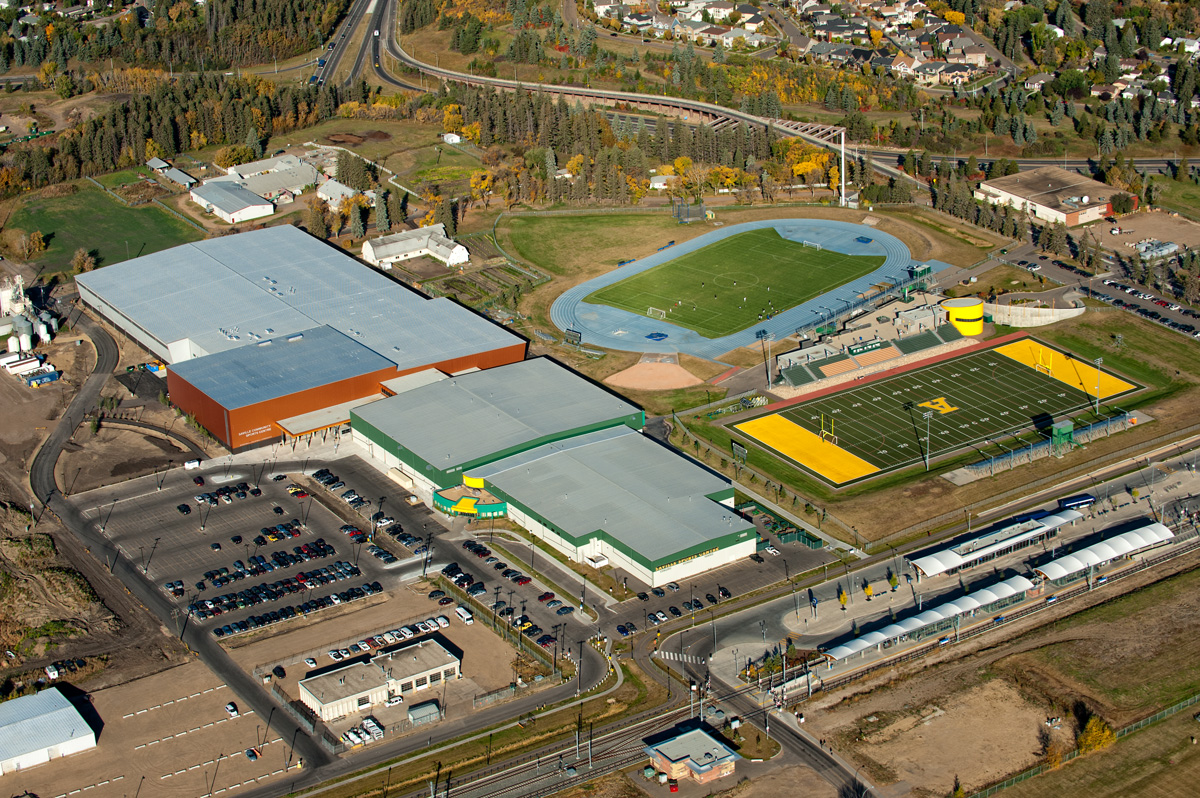
How can we build infill in a mature community with strategic infrastructure investments to support high-capacity transit ridership?
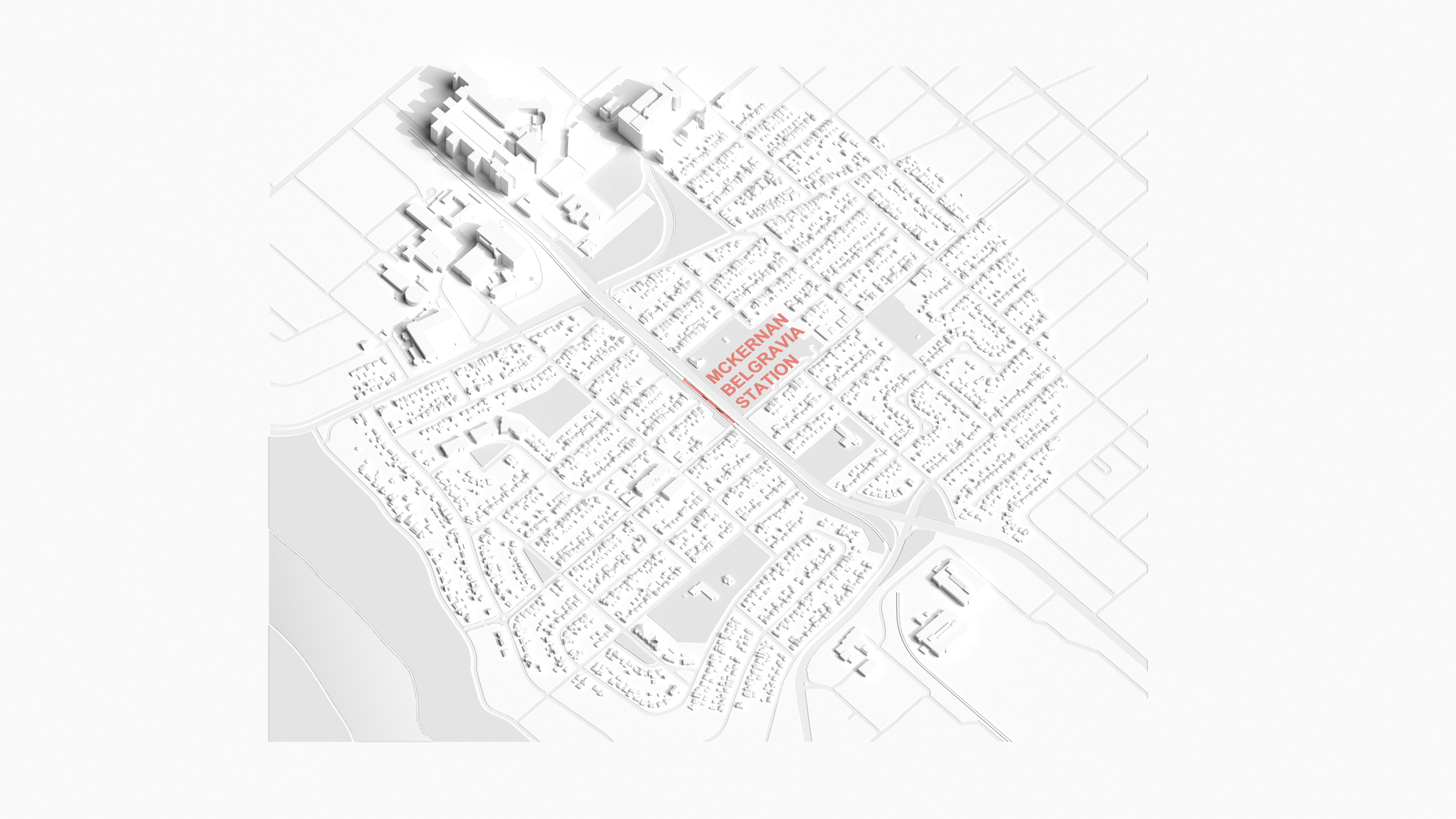
McKERNAN-BELGRAVIA STATION
Animation Frame 1: alt
Description: Transit-oriented development (TOD) can take many forms, from gradual increases in population to master-planned, high-density communities.
Animation Frame 2: alt
Description: In Edmonton, the residential neighbourhood of McKernan-Belgravia is an established community centrally located on the Capital Line but has not yet experienced significant transit-oriented development over the decades since the transit was opened.
Animation Frame 3: alt
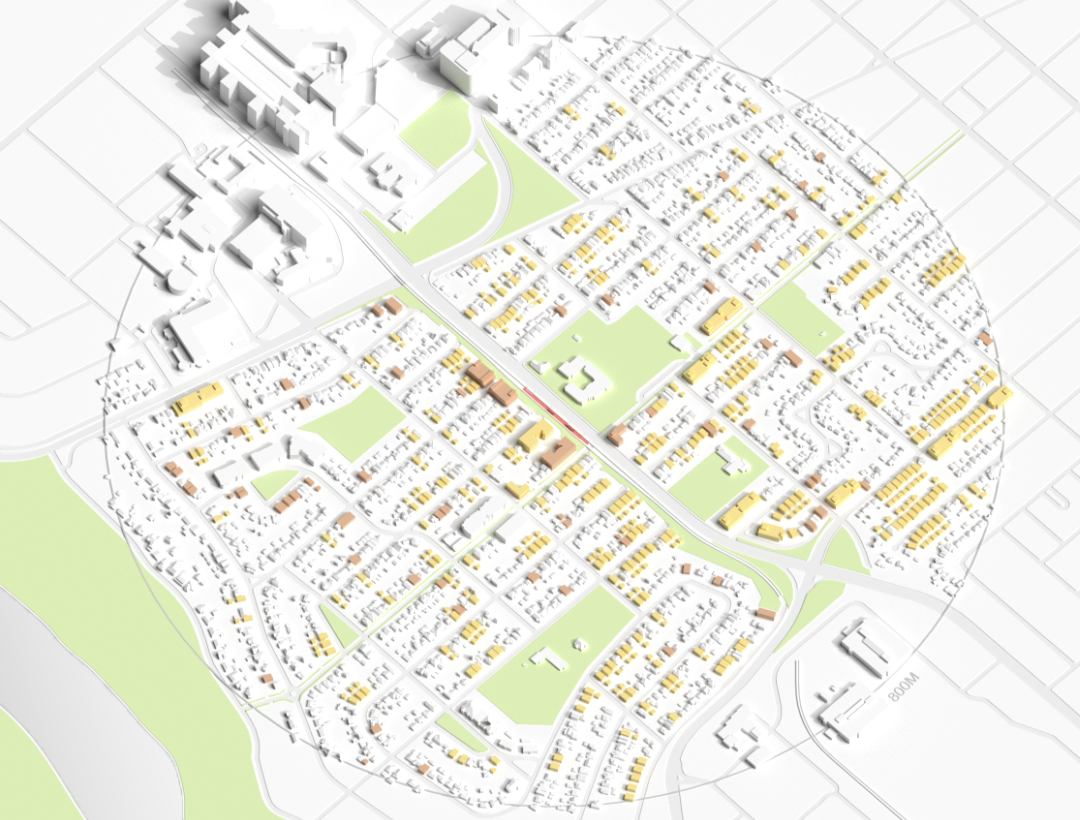
Description: The City has zoned for density around transit, but most of the growth in this area to date has been small-scale infill redevelopment of single lots, with fewer larger projects near the station itself.
This case explores how cities can plan for a transition to greater density in established neighbourhoods without losing the character and qualities that existing residents value: by layering varied housing and community amenities near the station to create the connectivity and pedestrian-friendly elements that drive transit use and make livable communities.
This is one of five case studies produced by the Infrastructure Institute and the School of Cities to identify different kinds of transit-oriented development across Canada and to explore the opportunities and trade-offs involved in creating thriving communities near transit. In each case, we examine current plans and patterns of growth and project what that community might look like in 20-30 years if development continues in this way (the “current trajectory”). We then present an alternative, “optimized” scenario that imagines changes that could address common challenges. We are guided by a focus on the identified principles of high-quality TOD: density, a diverse mix of land uses, and high-quality design (the “3Ds”).
Our station area renderings are hypothetical exercises to understand what development looks like in different kinds of urban settings based on existing zoning and community plans. They are not intended to be prescriptive guidance for specific properties or neighbourhoods. The models explore what is possible – what current research suggests are effective ways to add the residential density and supporting infrastructure that makes great communities. But communities must be planned by and for the people that live in them. We offer this analysis to spark discussion about what’s possible.
Neighbourhood overview
McKernan-Belgravia Station is located on the busiest corridor of the Capital Line, Edmonton’s oldest light rail transit (LRT) route. [1] The line plays a central role in the city’s transit network, connecting major destinations including the University of Alberta and downtown, and is supported by a high-frequency transit network in the city’s core. [2]
Data sources: Statistics Canada, Environics Analytics (2024).
The demographics of the McKernan-Belgravia neighbourhood are typical of areas near major universities. It is relatively affluent, has a high share of residents with university degrees, and has a markedly young population, with 44% of residents aged 15-34.
Household composition is an almost even split between family and non-family households. While single-detached homes account for 41% of all dwellings and visually define much of the streetscape, apartment dwellings and duplexes form the majority of the housing stock, at 56%. Over half of all dwellings are rented, and 70% of households are made up of one or two people. Although driving remains the largest commuter mode at about 56% – well below the national average of 81% [3] – this community demonstrates high transit potential: the rate of walking to work is nearly six times the city average, reflecting a preference for active, urban lifestyles.
Despite these strengths, gaps in local services remain. Apart from two active community-run centres, the station area lacks sufficient community-serving amenities within close walking distance, including libraries and convenience stores. Access to supermarkets, pharmacies, and restaurants also lags behind projected demand, increasing pressure on the public realm. Realizing the potential of the station area will require strategic infill and carefully planned supportive infrastructure to boost ridership and foster a destination-focused, complete community.
McKernan-Belgravia's current trajectory
In response to rising housing demand, Edmonton introduced a city-wide Zoning Bylaw Renewal Initiative in 2024, which permits eight-plexes as-of-right and eliminates the requirement for neighbour notification or consultation if proposals fall within the guidelines. The bylaw also supports larger developments on corner lots and along designated main corridors. Coupled with the removal of minimum parking requirements in 2020, these progressive and equity-based policies have increased flexibility for incremental development. So far, this has led to a rapid increase in small-scale infill embedded within existing residential streets in the neighbourhood.
The bylaw change contributed to a record increase in the number of “missing middle” permits approved in central neighbourhoods in 2025 [4] – but the City has faced criticism that it prioritizes quantity of units over quality of build, and that communities are not being included in decisions about how their neighbourhoods are changing. Many neighbours have expressed concerns that the units being constructed are poorly designed and too small to house families or long-term residents who will become part of the community.
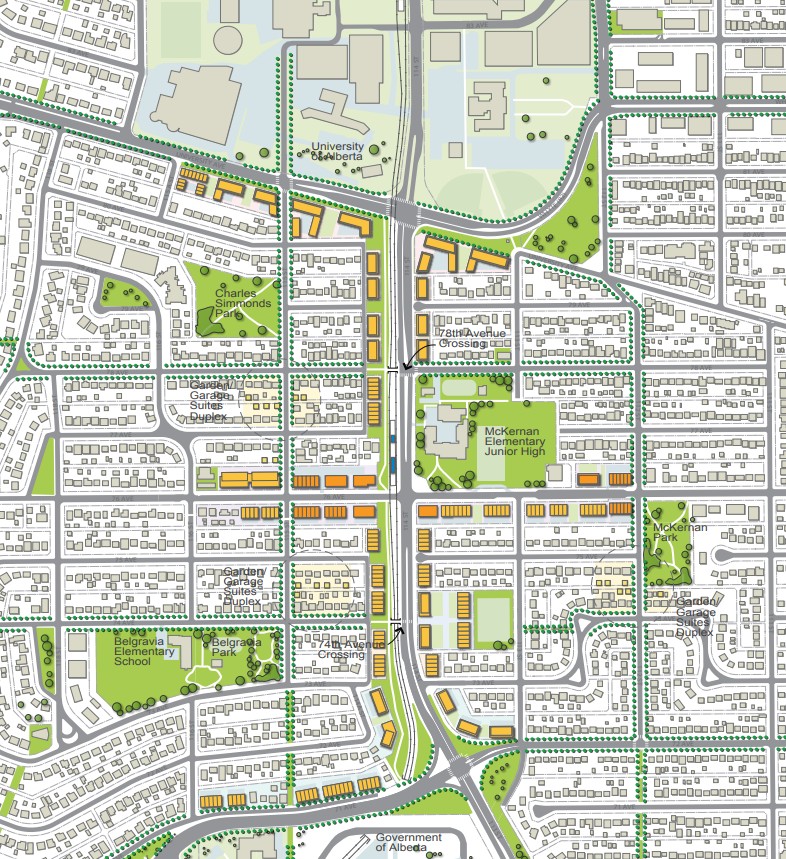
Going forward there is an opportunity to create a vibrant, walkable hub around the transit station that integrates shops and community infrastructure like libraries and community centres into larger buildings with housing above. The City’s vision calls for strategic density: medium-scale, mixed-use buildings – generally mid-rise forms with active ground floors – along major roads like 114 Street and 76 Avenue, complemented by new amenities and multimodal routes, with more modest infill within the neighbourhood fabric. Achieving this vision will mean encouraging a mix of higher-density construction close to the transit station alongside the small-scale infill that is emerging.
The City's vision for growth in the McKernan-Belgravia Station Area, shown here in their Redevelopment Plan, envisions medium-scale density along major corridors.Rendering by the City of Edmonton, 2024.
Optimized scenario: Aligning growth and infrastructure to incentivize transit use
Edmonton remains one of Canada’s most affordable cities, and TOD is often competing with single-family homes in more suburban areas at the same price. New developments in the McKernan-Belgravia station area can stand out by showing the best of urban living, with easy access to the two University of Alberta campuses nearby.
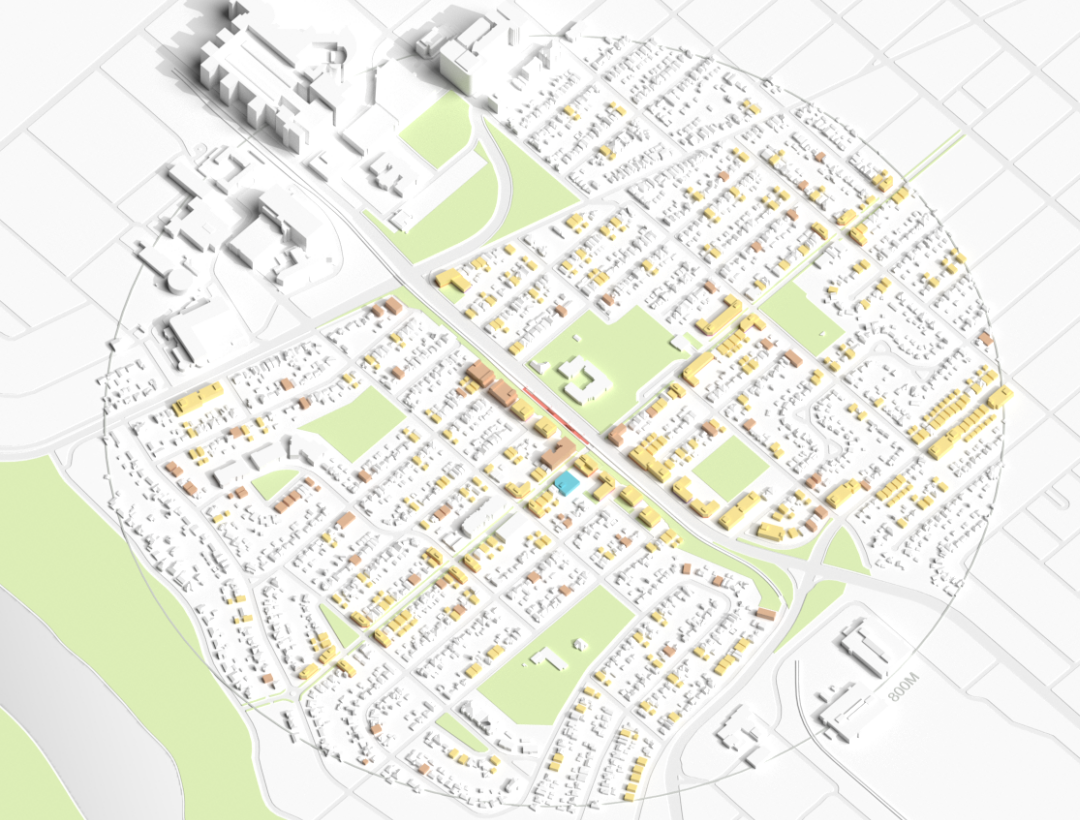
Here we explore an alternative scenario that optimizes for what are often called the “3Ds” of transit-oriented development – density, a diverse mix of land uses, and high-quality design – by encouraging mixed-use developments that can bring vitality to the area by co-locating housing with retail, community centres, and public services near transportation. [5] A central piece, therefore, is the creation of a destination-focused station area. Locating development where transit access is strongest allows density to function as a catalyst for amenities, activity, and daily destinations.
Here, infill is paired with supportive infrastructure, amenities, and public realm improvements to create a complete community. Re-aligning development patterns and encouraging active modes and transit use help concentrate activity around the station, foster a sense of place, and support higher transit use.
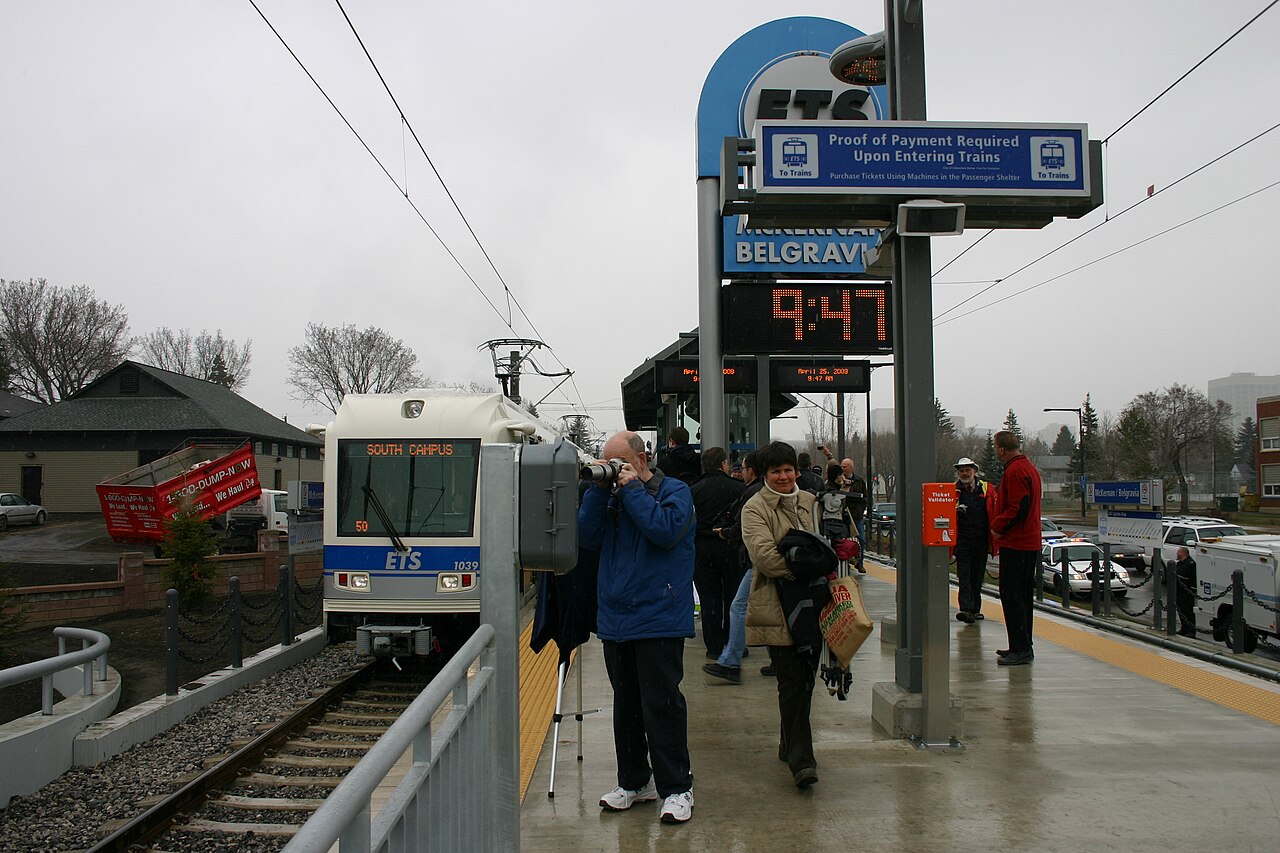
McKernan-Belgravia Station in 2009, the year it opened as part of Edmonton's Capital Line extension.Photo by Mack Male, 2009.
RECOMMENDATION 1:
Encourage medium-density, mixed-use growth along corridors through zoning and street design
With intensification through small-scale infill on single lots already underway in McKernan-Belgravia, there is now an opportunity to create a vibrant transit-oriented hub along the main avenues near the light rail station. This can be achieved by encouraging larger, mixed-use developments, in line with the City’s plan. Streamlining approvals, enabling as-of-right zoning of mixed-use buildings, and providing financial incentives for affordable housing are all strategies to encourage transit-oriented development. [6] One councillor has proposed temporary tax abatements for family-friendly mid-rise (six or more storeys) built within 400 metres of LRT stations as a way to encourage this kind of development, a measure supported by local infill advocates. [7] Larger, assembled sites can provide greater design flexibility and create local destinations near transit. [8]
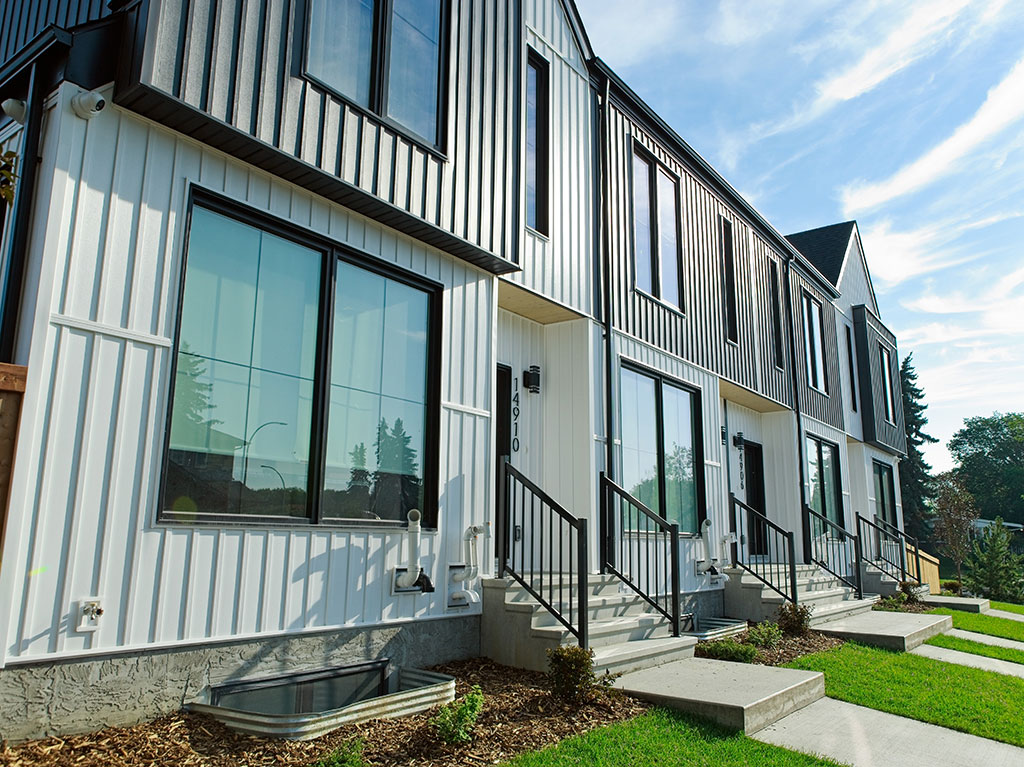
Medium-density rowhouses on large corner lots, like those pictured here, can help to increase density around transit and support amenities and infrastructure.Photo by the City of Edmonton, 2024.
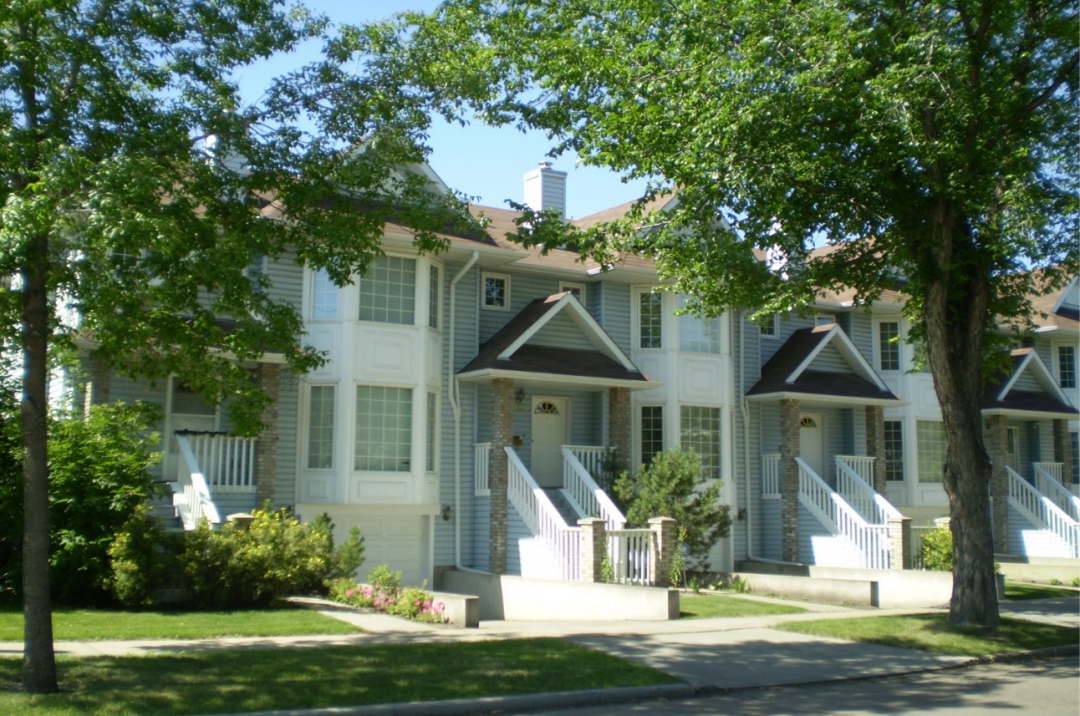
The Grovenor neighbourhood in Edmonton provides examples of duplex and low-rise development in a mature setting.Photo by the City of Edmonton, 2021.
However, zoning alone is not enough: growth also depends on street-level design, including active frontages, pedestrian-friendly streetscapes, and street reconfigurations that prioritize walking, cycling, and transit use. A criticism of permissive zoning is that it prioritizes speed and quantity over coordination with existing infrastructure and public realm improvements. To be effective, zoning must be paired with social infrastructure, retail, and public amenities. [9] Focusing medium-density infill along arterials and prominent corner lots concentrates activity where infrastructure and transit access are strongest.
A greater mix of land uses within developments contributes to increased walkability and has been linked with higher transit use. [10] Smaller station areas benefit most from a mix of land uses, improving quality of life and contributing to more sustainable mode share.
RECOMMENDATION 2:
Prioritize active transportation and transit and discourage driving
A key element of successful TOD in neighbourhoods like McKernan-Belgravia is ensuring that new development does not result in more car traffic and demand for parking in the neighbourhood, as these reduce the benefits of TOD and generate community opposition. To reinforce a shift toward transit, policies must disincentivize driving, not just in the neighbourhood but in the city as a whole.
Edmonton has already taken an important step by eliminating minimum parking requirements for new development. Research shows that minimum parking standards have historically resulted in oversupply, encouraging vehicle ownership and driving while taking space that could be used for green space or infrastructure for active modes. [11] Parking subsidies – particularly free or underpriced off-street parking – have been shown to distort travel behaviour and land use decisions by encouraging driving over more sustainable modes. [12]
Additional parking management tools – such as charging for on-street parking – can further discourage car reliance, thereby improving accessibility to destinations, reducing congestion, and enhancing pedestrian and cyclist safety. Traffic management measures such as reduced vehicle speeds, limited through-movement, and transit priority treatments should be used to discourage cut-through traffic, which already contributes to long delays exiting the neighbourhood at peak periods. Together, these measures help ensure that investments in transit and active transportation are supported by policies that meaningfully shift travel behaviour.
Improving pedestrian and cycling connectivity around McKernan-Belgravia can also strengthen access to the LRT station while supporting local trips without a car. Safe, seamless east-west pedestrian and cycling routes could transform 114 Street into a promenade linking the two university campuses, while 76 Avenue connects the neighbourhoods to nearby parks and open space along the North Saskatchewan River.
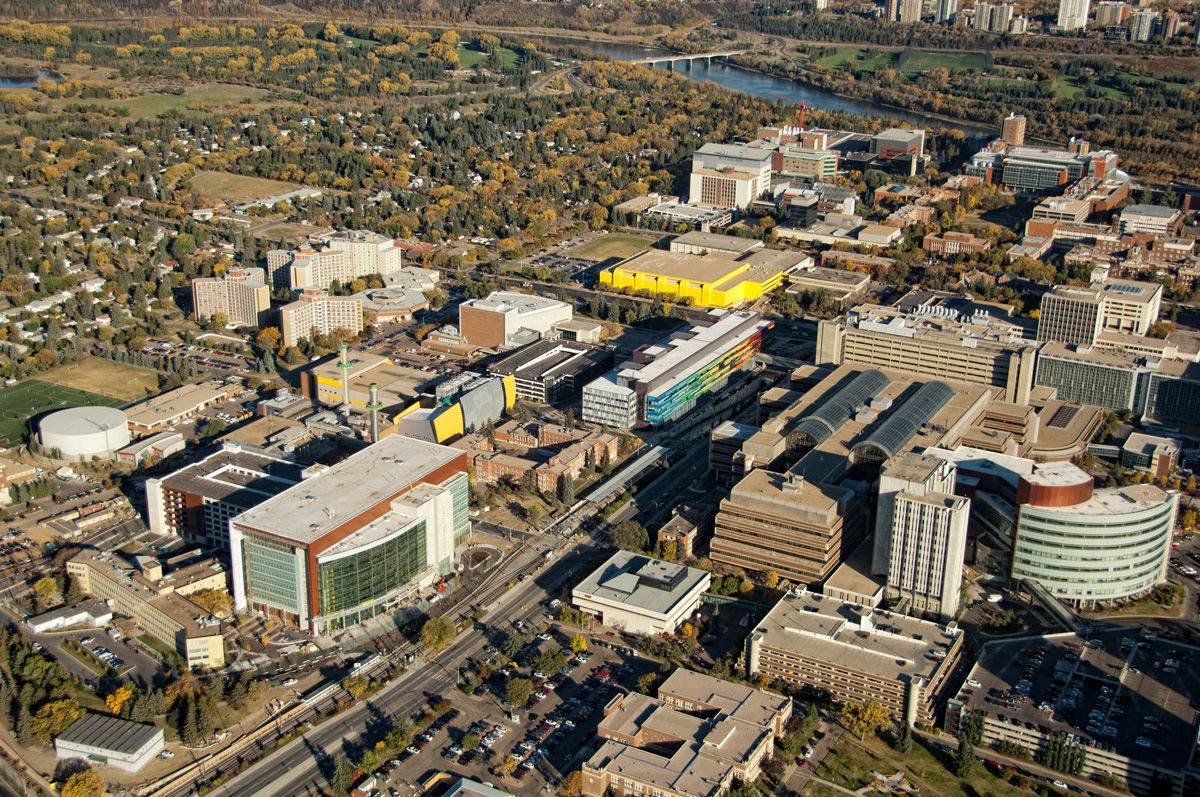
McKernan-Belgravia sits between the University of Alberta's North and South Campuses on the LRT. They anchor significant employment hubs for health care and education.Photos by the University of Alberta.
Transit quality itself is equally important. Research shows that the greatest TOD benefits occur when transit improvements meaningfully reduce travel times near higher-density development and enhanced amenities. [13] Common barriers to positive transit experiences are poor or infrequent transit service, unaffordable fares, and safety concerns. In Edmonton’s case, safety is the lowest-rated aspect of service, with only 62% of respondents reporting feeling safe during their journey. [14] Among non-users, personal safety remains a significant reason for avoiding transit altogether. Continuing to prioritize safety measures can improve perceptions of reliability and comfort across the system while boosting ridership among new and existing residents alike. [15]
RECOMMENDATION 3:
Encourage meaningful public participation to build support for density
Infill development can be controversial, particularly when changes happen quickly. Cities must balance the urgent need to build more housing in existing neighbourhoods with allowing communities to have a voice. A common criticism of site-by-site zoning approvals – how change in mature neighbourhoods happens in many Canadian cities – is that they make the approval process unnecessarily long and complex, effectively giving existing neighbours a veto over necessary housing development and often stopping it altogether. As-of-right zoning like the kind Edmonton has introduced reduces this complexity and factors in the needs of future residents, who may not be able to move into the neighbourhood yet because of cost and supply constraints.
Yet even those who support densification may oppose development that is poorly designed, seems imposed from the top down, or reduces public goods like green space and tree canopy. Planning operates within a political environment, and questions of density can easily become charged and polarized, contributing to frustration on all sides. It is important to balance meaningful and ongoing community engagement with development policy that allows density where it makes sense, including ensuring community members have the opportunity to be heard even after new policies have been introduced. This can help to ensure that infill is not only physically compatible but socially accepted, resilient, and sensitive to changing demographics.
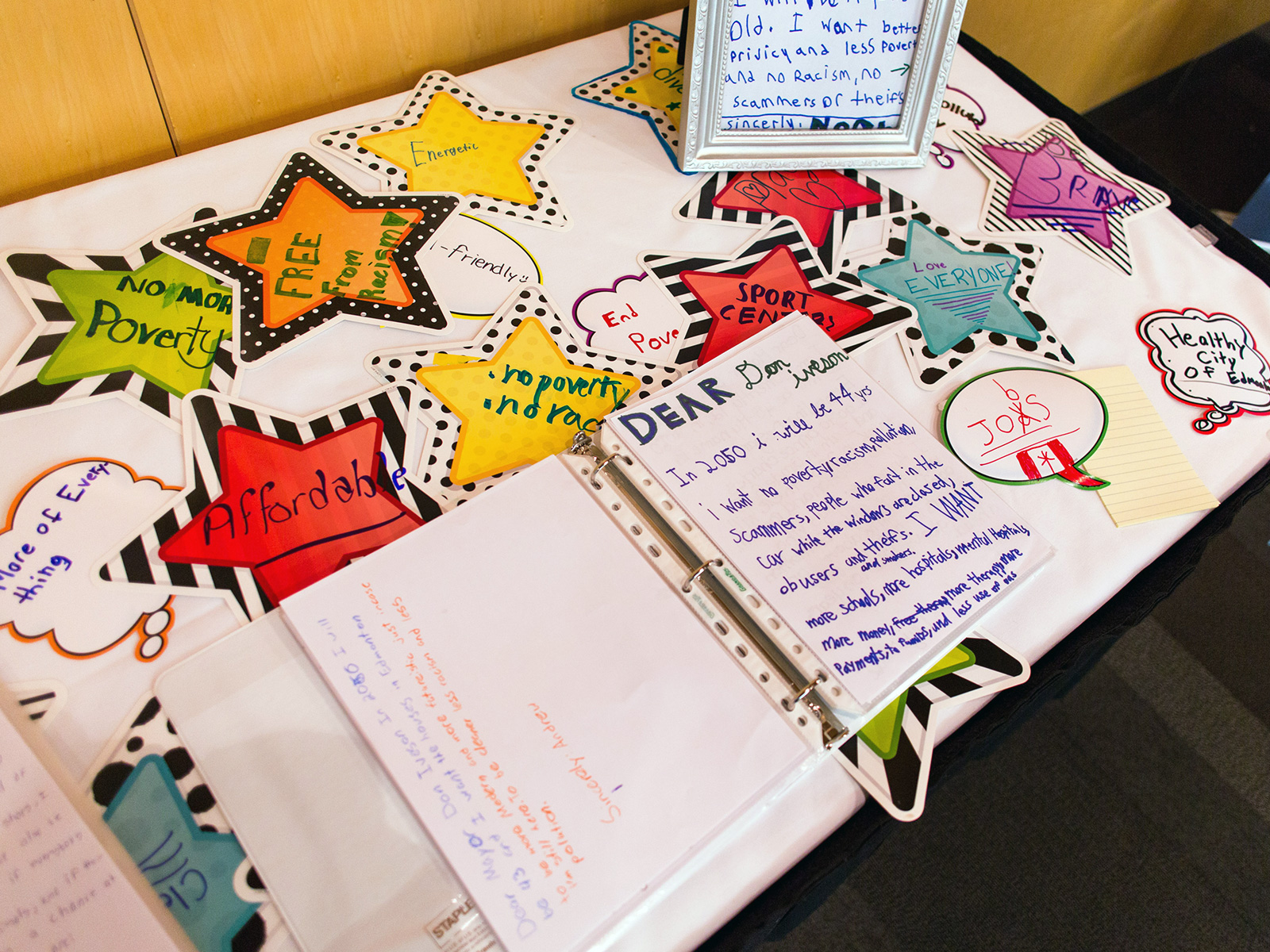
Well-designed public engagement exercises create opportunities to build shared understanding, support behavioural shifts, and strengthen residents’ sense of responsibility for both the process and its outcomes. [16] Effective engagement must happen very early in the process of developing a broader vision and general plan for the city, and requires grounding conversations in resident values rather than abstract growth targets. [17] Framing infill around priorities such as aging in place and enabling families to remain in their communities can build trust, increase local ownership, and improve receptiveness to change. [18]
Public engagement sessions for Edmonton's Vision 2050 Plan.Photo by the City of Edmonton, 2018.
The path forward is apparent: policy should incentivize high-quality development near the station, while actively deterring vehicle dependence. Though the direction is simple, implementation is complex – it requires weaving together refinements in parcel availability, traffic management, and streetscape design that ensure the seamless movement of people. Balancing zoning and incentives for mixed-use development with an understanding of market realities is essential to ensure both coordinated growth and sufficient housing supply.
Research and writing: Sarah Chan, Anika Reisha Taboy, Matti Siemiatycki, Kathryn Exon Smith Concept design development: Daniel Lam, Phat Le Maps and data visualization: Isabeaux Graham, Jeff Allen Web development: Mieko Yao, Jeff Allen Additional contributors: An Pham, Carrie Zeng ~ March 2026
Robert Cervero and Kara Kockelman, "Travel demand and the 3Ds: Density, diversity, and design." Transportation Research Part D: Transport and environment 2, no. 3 (1997): 199-219
Julian Bolleter et al., “Delivering Medium‑Density Infill Development Through Promoting the Benefits and Limiting Background Infill,” Journal of Urban Design (2020), DOI
“Refocusing Infill: How Can We Build More Family-Friendly, More Affordable Housing Choices at LRT Stations?,” Michael Janz (website), August 5, 2025, URL
Robin Lindsey et al., “Distributional Effects of Urban Transport Policies to Discourage Car Use: A Literature Review,” OECD Environment Working Papers No. 211 (2023), DOI
Corinne Mulley et al., “Land Value Gains and Value Capture: The Potential for Financing Public Transport Infrastructure,” The Routledge Handbook of Public Transport (2021), 123–137.
Meg Holden, “Bringing the Neighbourhood Into Urban Infill Development in the Interest of Well-Being," International Journal of Community Well-Being 1 (2019): 137–155, DOI
Jordan Moffatt and Carolyn Whitzman, Saying Yes to Affordable Housing in Toronto: Options for democratic participation in community planning (University of Toronto School of Cities, forthcoming).